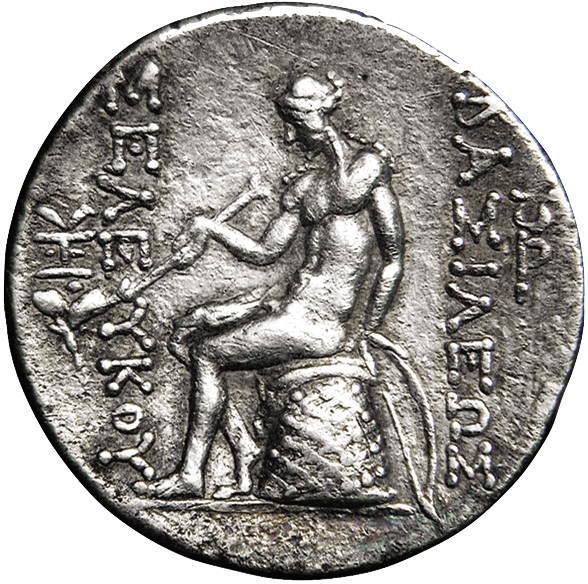
The
Philistis
was the wife of Hieron himself.
William Smith - 1844 - Dictionary of Greek and Roman Antiquities - c
Remembering the con- (Hephaest.
p.
53).
There is much dispute whether
stant confusion of the names Philiscus and Philistus, the name should be written Mokos or DiAikos,
we may safely ascribe to this orator the onunyoplan, but the former appears to be the true form, though
which Suidas mentions among the works of the he himself, for the sake of metre, used the latter.
historian Philistus of Syracuse. (Suid. s. v. DINOTOS; (Naeke, Sched. Crit. pp. 18, &c. , in Opusc. vol. i.
it is also to be observed that Suidas, in addition to pp. 29, &c. ; Welcker, Die Griech Trag. p.
his article Pinotos, gives a life of the Syracusan 1265. )
(P. S. )
historian under the head of Φίλισκος ή Φίλιστος, PHILISCU'S, artists. 1. A painter, of whom
comp. Philistus). Suidas (s. v. Tiuatos) states we have no information, except the mention, by
that the historian Timaeus was a disciple of Phi- Pliny, of his picture of a painter's studio, with a
liscus of Miletus; another disciple was Neanthes boy blowing the fire. (H. N. xxxv. 11. 8. 40. $
of Cyzicus (Ruhnken, Hist. Crit. Orat. Graec. 38. )
p. Ixxxiii. , Opusc. p. 367; Clinton, F. H. vol. iii. 2. Of Rhodes, a sculptor, several of whose
works were placed in the temple of Apollo, adjoin-
3. Of Aegina. It is doubtful whether there ing the portico of Octavia at Rome. One of these
was one or iwo cynic philosophers of this name statues was that of the god himself: the others
from Aegina. Suidas has two, of one of whom were Latona and Diana, the nine Muses, and
he says that he was the disciple of Diogenes the another statue of Apollo, without drapery. Within
Cynic, or, according to Hermippus, of Stilpon, that the portico, in the temple of Juno, was a statue of
he was the teacher of Alexander in grammar, and Venus, by the same artist (Plin. H. N. xxxvi. 5.
that he wrote dialogues, one of which was entitled . 4. $ 10). From this statement it is evident
Kópos ; of the other, Suidas says that, having that Philiscus made some of the statues expressly
gone from Aegina to Athens, in order to see the for the temples, but whether at the time of their
city, he heard Diogenes, and addicted himself to first erection by Metellus (B. c. 146), or of their
philosophy: and that his brother, having been sent restoration by Augustus more than a hundred years
by his father to Athens to fetch him home, also later, cannot be determined with certainty. Most
staid there, and became a philosopher ; and lastly, of the writers on art place him at the earlier date ;
the father himself, having gone to Athens in but at all events he belonged to that period of the
search of his sons, became infected with the philo- revival of art which, according to Pliny, began
Bophical mania : the rest of the article refers to with the 155th Olympiad (RC. 160), and which
Diogenes himself. The latter article is taken from extended down to the time of the Antonines ;
Diogenes Laërtius (vi. 75, 76), who mentions the during which period the Rhodian school sent forth
name of the father, Onesicritus, and who evidently several of the best statuaries and sculptors, and
only speaks of one cynic philosopher of the name Rome became a great seat of the arts. The group
of Philiscus (comp. vi. 73, 80, 84). This is, of Muses, found in the villa of Cassius at Tivoli,
therefore, very probably one of the many cases in is supposed by Visconti to be a copy of that of
which Suidas makes two articles out of the same Philiscus. Meyer takes the beautiful statue at
name, by copying statements from two different Florence, known as the Apollino, for the naked
authors. We do not see the force of Naeke's Apollo of Philiscus ; it is engraved in Müller's
argument (Sched. Crit. p. 25), that the Philiscus of Denkmäler d. alten Kunst, vol. ii. pl. xi. fig. 126.
whom the tale in Diogenes and Suidas is told, (Meyer, Kunstgeschichte, vol. iii. pp. 35, 120; Hirt,
could hardly, for chronological reasons, be the Gesch. d. bild. Künste, p. 298 ; Müller, Archäol. d.
same person as the teacher of Alexander. Some Kunst, &$ 160. n. 2, 393, n. 2. ) [P. S. )
ancient writers ascribed to Philiscus some, or even PHILISCUS, P. ATI'LIUS, killed his own
all, of the tragedies of Diogenes the Cynic, probably daughter, because she had been guilty of forni-
through confounding him with the celebrated tragic cation. (Val. Max. ri. 1. $ 6. )
poet of the same name. (Diog. Laërt. vi. 73; PHILI'STION (111oTiwv) of Nicaea or Mag-
Julian. Orat. vi. vii. ; Naeke, l. c. ; Clinton, F. H. nesia, a mimographer, who flourished in the time
p. 25).
.
## p. 295 (#311) ############################################
&
PHILISTION.
PHILJSTUS.
295
of Augustus, about A. D. 7 (Hieron. in Euscb. | (Athen. xii. 12, p. 516), and is several times
Chron. 01. 196. 3). He was an actor, as well as quoted by Pliny (H. N. xx. 15, 34, 48) and
a writer of mimes, and is said, in an epigram pre-Galen (De Nat. Facult. ii. 8, vol. ii. p. 110, De
served in the Greek Anthology, to have died of Usu Respir. c. 1, vol. iv. p. 471, De Meth. Med.
excessive laughter (Jacobs, Anth. Graec. vol. iv. i. 3, ii. 5, vol. x. pp. 28, 111). Oribasius attributes
p. 230 ; Anth. Pal. vol. ii. p. 349). He is fre- to him the invention of a machine for reducing
quently mentioned by the Greek writers of the luxations of the humerus (De Machinam. c. 4, p.
second century and downwards. Suidas, who, by 164). He is perhaps the person mentioned by
some extraordinary error, has placed his death in M. Aurelius Antoninus (vi. 47).
the time of Socrates, makes him a native of Prusa, A brother of Philistion, who was also a phy-
and says that he wrote kwuqolas Brodoyinds (that sician, but whose name is not known, is quoted
is, mimes), that he wrote a play called M100- by Caelius Aurelianus. (De Morb. Chron. iii. 8,
unplotal, and a work entitled Dinoyénws. He is v. 1, pp. 488, 555. )
[W. A. G. )
mentioned by Tzetzes (Proleg. ad Lycophr. p. 257), PHILISTIS (VALOTIS), a queen of Syracuse,
among the poets of the New Comedy, but the known only from her coins, which are numerous,
name is there, almost certainly, an error for Pui and of fine workmanship, and from the occurrence
LIPPIDES.
of her name (bearing the title of queen, as it does
We have no fragments of Philistion, but there also on her coins) in an inscription in large letters
is a work extant under the title of LúyKPLOIS on the great theatre of Syracuse. The circum-
Μενάνδρου και Φιλιστίωνος, which is a collection stance that it is here associated with that of Nereis,
of lines, containing moral sentiments, from Menan- the wife of Gelon, as well as the style and fabric
der and some other poet of the New Comedy, of the coins, which closely resemble those of Hie-
who of course could not be Philistion the mimo- ron II. and his son, leads to the conclusion that
grapher. All difficulty is however removed by these were struck during the long reign of Hie-
the emendation of Meineke, who substitutes An- ron II. ; and the most probable conjecture is that
novos for Þ! Alotlwvos. (Comp. PHILEMON).
The Philistis was the wife of Hieron himself. (R. Ro-
work was first edited by N. Rigaltius, Par. 1613, chette, Mémoires de Numismatique et d'Antiquité,
afterwards, in a much improved state, by J. Rut- pp. 63—78 ; Visconti, Iconogr. Grecque, vol. ii.
gersius, in his Var. Lect. vol. iv. p. 355—367, pp. 21–25. The earlier disquisitions and hypo-
with the notes of Heinsius. Boissonade has pub- theses on the subject are cited by these two an-
lished the work, from a Paris MS. , in his Anee- thors. )
[E. H. B. )
dota, vol. i. p. 146–150, whence Meineke has PHILISTUS ("Autos). 1. An Athenian,
transferred it into his Fragmenta Comicorum son of Pasicles, who accompanied Neleus, the son
Graecorum, vol. iv. pp. 335—339. (Fabric. of Codrus, on his migration to lonia, where he
Bibl. Graec. vol. ii. p. 480 ; Meineke, Menand. et founded a temple on the promontory of Mycale,
Philem. Relig. Praef. p. vii. &c. ; Clinton, F. H. dedicated to the Eleusinian Demeter. (Herod.
sub ann. A. D. 7 ; Bernhardy, Geschichte der Griech. ix. 97. )
Litt. vol. ii. p. 924. )
[P. S. ) 2. Á Syracusan, son of Archonides or Archo-
PHILI'STION, an engraver of medals, whose menides (Suid. v. ÞÉALTOS ; Paus, v. 23. 86), one
name occurs in two forms, ÞIAIETION (Ĉnolet) of the most celebrated historians of antiquity,
and ÞIAITIANOZ (épyov), in very small cha- | though, unfortunately, none of his works have come
racters, but perfectly distinct, on the crest of the down to us. The period of his birth is not men-
helmet of the head of Minerva, which forms the tioned, but it can bardly be placed later than B. C.
type of a great number of coins of Velia. (Raoul. 435, as Plutarch expressly speaks of him as having
Rochette, Lettre à M. Schorn, p. 94, 2d ed. ) (P. S. ] been an eye-witness of the operations of Gylippus,
PHILI'STION (PALOTlw), a physician, born during the siege of Syracuse by the Athenians, in
either at one of the Greek towns in Sicily (Diog. B. C. 415, and also tells us that he was an old man
Laërt. Vit. Philos. viii. 8. 88 86, 89), or among the at the time of his death in B. C. 356. (Plut. Nic.
Locri Epizephyrii in Italy (Galen, De Meth. Med. 19, Dion, 35. ) It seems also probable that he was
i. 1, vol. x. p. 6; Ruf. Ephes. De Corp. Hum. considerably older than Dionysius. The first oc-
Part. Appell. p. 41 ; Plut. Sympos. vii. 1. § 3;casion on which we hear of his appearance in public
Aul. Gell. Noct. Att. xvii. 11. § 3; Athen. iii. life was after the capture of Agrigentum by the
83, p. 115). He was tutor to the physician Carthaginians in. B. C. 406, when Dionysius, then
Chrysippus of Cnidos (Diog. Laërt. I. c. $ 89) and a young man, came forward in the assembly of the
the astronomer and physician Eudoxus (Callim. ap: people to inflame the popular indignation against
Diog. Laërt. 8 86), and therefore must have lived their unsuccessful generals, and the magistrates
in the fourth century B. c. He was one of those having imposed on him a fine for turbulent and
who defended the opinion that what is drunk goes seditious language, Philistus not only discharged
into the lungs (Plut. 1. c. ; Aul. Gell. l. c. ). Some the fine, but expressed his willingness to do so as
ancient critics attributed to Philistion the treatise often as the magistrates should think fit to inflict
De Salubri Victus Ratione (Galen, Comment. in it. (Diod. xiii. 91. ) Having by this means paved
Hippocr. “ De Rat. Vict, in Morb. Acut. ” i. 17, vol. the way for the young demagogue to the attain-
xv. p. 455, Comment. in Hippocr. “ Aphor. ” vi. 1, ment of the supreme power, he naturally enjoyed
vol. xvii. pt. i. p. 9), and also that De Victus a high place in his favour during the period of his
Ratione (Galen, De Aliment. Facult. i. 1, vol. vi. p. rule ; so great indeed was the confidence reposed
473), both of which form part of the Hippocratic in him by Dionysius, that the latter entrusted him
Collection ; and by some persons he was considered with the charge of the citadel of Syracuse, upon
to be one of the founders of the sect of the Empirici the safe custody of which his power in great mea-
(De Subfig. Empir. c. 1, vol. ii. p. 340, ed. Chart. ). sure depended. According to one account, also, it
He wrote a work on materia medica (Galen, De was Philistus who, by his energetic and spirited
Succed. init. vol. xix. p. 721) and on Cookery | counsels, prevented Dionysius from abandoning
u 4
## p. 296 (#312) ############################################
296
PHILISTUS.
PHILISTUS.
Syracuse in despair, when besieged by the Car- ! It is perhaps wo much to represent Philistrs,
thaginians, B. C. 396 (Diod. xiv. 8; Plut. Dion, as has been done by some writers of antiquity,
35), and this account may be substantially correct, as a man naturally disposed in favour of absolute
even though the saying attributed to him, that a power (* hominem amicum non magis tyranno quam
despot should not abandon his power unless tyrannidi," says Cornelius Nepos, Dion, 3); but it is
dragged from it by main force, seems to be more clear that he was desirous to uphold by every means
correctly ascribed to Megacles or Polyxenus. But a despotism under the favour of which be enjoyed
at a later period he excited the jealousy of the wealth and power, and had the opportunity of in-
tyrant by marrying, without his consent, one of duiging his natural taste for luxury and magnifi-
the daughters of his brother Leptines, and was in cence. There seems no doubt that he possessed
consequence banished from Sicily. He at first re- very considerable talents of a practical as well as
tired to Thurii, but afterwards established himself literary kind, but he wholly wanted the lofty and
at Adria, where he previously possessed friendly generous spirit which should animate the citizen of
relations : and it was here that he devoted the a free republic: and this character was reflected in
leisure afforded him by his exile to the composition his writings, which presented a marked contrast to
of the historical work which has given celebrity those of Thucydides in their spirit and sentiments,
to his name. (Diod. xv. 7; Plut. Dion, 11 ; the notwithstanding a close imitation in style. (Plut.
latter author, however, in another passage, de Dion, 36 ; Dion. Hal.
stant confusion of the names Philiscus and Philistus, the name should be written Mokos or DiAikos,
we may safely ascribe to this orator the onunyoplan, but the former appears to be the true form, though
which Suidas mentions among the works of the he himself, for the sake of metre, used the latter.
historian Philistus of Syracuse. (Suid. s. v. DINOTOS; (Naeke, Sched. Crit. pp. 18, &c. , in Opusc. vol. i.
it is also to be observed that Suidas, in addition to pp. 29, &c. ; Welcker, Die Griech Trag. p.
his article Pinotos, gives a life of the Syracusan 1265. )
(P. S. )
historian under the head of Φίλισκος ή Φίλιστος, PHILISCU'S, artists. 1. A painter, of whom
comp. Philistus). Suidas (s. v. Tiuatos) states we have no information, except the mention, by
that the historian Timaeus was a disciple of Phi- Pliny, of his picture of a painter's studio, with a
liscus of Miletus; another disciple was Neanthes boy blowing the fire. (H. N. xxxv. 11. 8. 40. $
of Cyzicus (Ruhnken, Hist. Crit. Orat. Graec. 38. )
p. Ixxxiii. , Opusc. p. 367; Clinton, F. H. vol. iii. 2. Of Rhodes, a sculptor, several of whose
works were placed in the temple of Apollo, adjoin-
3. Of Aegina. It is doubtful whether there ing the portico of Octavia at Rome. One of these
was one or iwo cynic philosophers of this name statues was that of the god himself: the others
from Aegina. Suidas has two, of one of whom were Latona and Diana, the nine Muses, and
he says that he was the disciple of Diogenes the another statue of Apollo, without drapery. Within
Cynic, or, according to Hermippus, of Stilpon, that the portico, in the temple of Juno, was a statue of
he was the teacher of Alexander in grammar, and Venus, by the same artist (Plin. H. N. xxxvi. 5.
that he wrote dialogues, one of which was entitled . 4. $ 10). From this statement it is evident
Kópos ; of the other, Suidas says that, having that Philiscus made some of the statues expressly
gone from Aegina to Athens, in order to see the for the temples, but whether at the time of their
city, he heard Diogenes, and addicted himself to first erection by Metellus (B. c. 146), or of their
philosophy: and that his brother, having been sent restoration by Augustus more than a hundred years
by his father to Athens to fetch him home, also later, cannot be determined with certainty. Most
staid there, and became a philosopher ; and lastly, of the writers on art place him at the earlier date ;
the father himself, having gone to Athens in but at all events he belonged to that period of the
search of his sons, became infected with the philo- revival of art which, according to Pliny, began
Bophical mania : the rest of the article refers to with the 155th Olympiad (RC. 160), and which
Diogenes himself. The latter article is taken from extended down to the time of the Antonines ;
Diogenes Laërtius (vi. 75, 76), who mentions the during which period the Rhodian school sent forth
name of the father, Onesicritus, and who evidently several of the best statuaries and sculptors, and
only speaks of one cynic philosopher of the name Rome became a great seat of the arts. The group
of Philiscus (comp. vi. 73, 80, 84). This is, of Muses, found in the villa of Cassius at Tivoli,
therefore, very probably one of the many cases in is supposed by Visconti to be a copy of that of
which Suidas makes two articles out of the same Philiscus. Meyer takes the beautiful statue at
name, by copying statements from two different Florence, known as the Apollino, for the naked
authors. We do not see the force of Naeke's Apollo of Philiscus ; it is engraved in Müller's
argument (Sched. Crit. p. 25), that the Philiscus of Denkmäler d. alten Kunst, vol. ii. pl. xi. fig. 126.
whom the tale in Diogenes and Suidas is told, (Meyer, Kunstgeschichte, vol. iii. pp. 35, 120; Hirt,
could hardly, for chronological reasons, be the Gesch. d. bild. Künste, p. 298 ; Müller, Archäol. d.
same person as the teacher of Alexander. Some Kunst, &$ 160. n. 2, 393, n. 2. ) [P. S. )
ancient writers ascribed to Philiscus some, or even PHILISCUS, P. ATI'LIUS, killed his own
all, of the tragedies of Diogenes the Cynic, probably daughter, because she had been guilty of forni-
through confounding him with the celebrated tragic cation. (Val. Max. ri. 1. $ 6. )
poet of the same name. (Diog. Laërt. vi. 73; PHILI'STION (111oTiwv) of Nicaea or Mag-
Julian. Orat. vi. vii. ; Naeke, l. c. ; Clinton, F. H. nesia, a mimographer, who flourished in the time
p. 25).
.
## p. 295 (#311) ############################################
&
PHILISTION.
PHILJSTUS.
295
of Augustus, about A. D. 7 (Hieron. in Euscb. | (Athen. xii. 12, p. 516), and is several times
Chron. 01. 196. 3). He was an actor, as well as quoted by Pliny (H. N. xx. 15, 34, 48) and
a writer of mimes, and is said, in an epigram pre-Galen (De Nat. Facult. ii. 8, vol. ii. p. 110, De
served in the Greek Anthology, to have died of Usu Respir. c. 1, vol. iv. p. 471, De Meth. Med.
excessive laughter (Jacobs, Anth. Graec. vol. iv. i. 3, ii. 5, vol. x. pp. 28, 111). Oribasius attributes
p. 230 ; Anth. Pal. vol. ii. p. 349). He is fre- to him the invention of a machine for reducing
quently mentioned by the Greek writers of the luxations of the humerus (De Machinam. c. 4, p.
second century and downwards. Suidas, who, by 164). He is perhaps the person mentioned by
some extraordinary error, has placed his death in M. Aurelius Antoninus (vi. 47).
the time of Socrates, makes him a native of Prusa, A brother of Philistion, who was also a phy-
and says that he wrote kwuqolas Brodoyinds (that sician, but whose name is not known, is quoted
is, mimes), that he wrote a play called M100- by Caelius Aurelianus. (De Morb. Chron. iii. 8,
unplotal, and a work entitled Dinoyénws. He is v. 1, pp. 488, 555. )
[W. A. G. )
mentioned by Tzetzes (Proleg. ad Lycophr. p. 257), PHILISTIS (VALOTIS), a queen of Syracuse,
among the poets of the New Comedy, but the known only from her coins, which are numerous,
name is there, almost certainly, an error for Pui and of fine workmanship, and from the occurrence
LIPPIDES.
of her name (bearing the title of queen, as it does
We have no fragments of Philistion, but there also on her coins) in an inscription in large letters
is a work extant under the title of LúyKPLOIS on the great theatre of Syracuse. The circum-
Μενάνδρου και Φιλιστίωνος, which is a collection stance that it is here associated with that of Nereis,
of lines, containing moral sentiments, from Menan- the wife of Gelon, as well as the style and fabric
der and some other poet of the New Comedy, of the coins, which closely resemble those of Hie-
who of course could not be Philistion the mimo- ron II. and his son, leads to the conclusion that
grapher. All difficulty is however removed by these were struck during the long reign of Hie-
the emendation of Meineke, who substitutes An- ron II. ; and the most probable conjecture is that
novos for Þ! Alotlwvos. (Comp. PHILEMON).
The Philistis was the wife of Hieron himself. (R. Ro-
work was first edited by N. Rigaltius, Par. 1613, chette, Mémoires de Numismatique et d'Antiquité,
afterwards, in a much improved state, by J. Rut- pp. 63—78 ; Visconti, Iconogr. Grecque, vol. ii.
gersius, in his Var. Lect. vol. iv. p. 355—367, pp. 21–25. The earlier disquisitions and hypo-
with the notes of Heinsius. Boissonade has pub- theses on the subject are cited by these two an-
lished the work, from a Paris MS. , in his Anee- thors. )
[E. H. B. )
dota, vol. i. p. 146–150, whence Meineke has PHILISTUS ("Autos). 1. An Athenian,
transferred it into his Fragmenta Comicorum son of Pasicles, who accompanied Neleus, the son
Graecorum, vol. iv. pp. 335—339. (Fabric. of Codrus, on his migration to lonia, where he
Bibl. Graec. vol. ii. p. 480 ; Meineke, Menand. et founded a temple on the promontory of Mycale,
Philem. Relig. Praef. p. vii. &c. ; Clinton, F. H. dedicated to the Eleusinian Demeter. (Herod.
sub ann. A. D. 7 ; Bernhardy, Geschichte der Griech. ix. 97. )
Litt. vol. ii. p. 924. )
[P. S. ) 2. Á Syracusan, son of Archonides or Archo-
PHILI'STION, an engraver of medals, whose menides (Suid. v. ÞÉALTOS ; Paus, v. 23. 86), one
name occurs in two forms, ÞIAIETION (Ĉnolet) of the most celebrated historians of antiquity,
and ÞIAITIANOZ (épyov), in very small cha- | though, unfortunately, none of his works have come
racters, but perfectly distinct, on the crest of the down to us. The period of his birth is not men-
helmet of the head of Minerva, which forms the tioned, but it can bardly be placed later than B. C.
type of a great number of coins of Velia. (Raoul. 435, as Plutarch expressly speaks of him as having
Rochette, Lettre à M. Schorn, p. 94, 2d ed. ) (P. S. ] been an eye-witness of the operations of Gylippus,
PHILI'STION (PALOTlw), a physician, born during the siege of Syracuse by the Athenians, in
either at one of the Greek towns in Sicily (Diog. B. C. 415, and also tells us that he was an old man
Laërt. Vit. Philos. viii. 8. 88 86, 89), or among the at the time of his death in B. C. 356. (Plut. Nic.
Locri Epizephyrii in Italy (Galen, De Meth. Med. 19, Dion, 35. ) It seems also probable that he was
i. 1, vol. x. p. 6; Ruf. Ephes. De Corp. Hum. considerably older than Dionysius. The first oc-
Part. Appell. p. 41 ; Plut. Sympos. vii. 1. § 3;casion on which we hear of his appearance in public
Aul. Gell. Noct. Att. xvii. 11. § 3; Athen. iii. life was after the capture of Agrigentum by the
83, p. 115). He was tutor to the physician Carthaginians in. B. C. 406, when Dionysius, then
Chrysippus of Cnidos (Diog. Laërt. I. c. $ 89) and a young man, came forward in the assembly of the
the astronomer and physician Eudoxus (Callim. ap: people to inflame the popular indignation against
Diog. Laërt. 8 86), and therefore must have lived their unsuccessful generals, and the magistrates
in the fourth century B. c. He was one of those having imposed on him a fine for turbulent and
who defended the opinion that what is drunk goes seditious language, Philistus not only discharged
into the lungs (Plut. 1. c. ; Aul. Gell. l. c. ). Some the fine, but expressed his willingness to do so as
ancient critics attributed to Philistion the treatise often as the magistrates should think fit to inflict
De Salubri Victus Ratione (Galen, Comment. in it. (Diod. xiii. 91. ) Having by this means paved
Hippocr. “ De Rat. Vict, in Morb. Acut. ” i. 17, vol. the way for the young demagogue to the attain-
xv. p. 455, Comment. in Hippocr. “ Aphor. ” vi. 1, ment of the supreme power, he naturally enjoyed
vol. xvii. pt. i. p. 9), and also that De Victus a high place in his favour during the period of his
Ratione (Galen, De Aliment. Facult. i. 1, vol. vi. p. rule ; so great indeed was the confidence reposed
473), both of which form part of the Hippocratic in him by Dionysius, that the latter entrusted him
Collection ; and by some persons he was considered with the charge of the citadel of Syracuse, upon
to be one of the founders of the sect of the Empirici the safe custody of which his power in great mea-
(De Subfig. Empir. c. 1, vol. ii. p. 340, ed. Chart. ). sure depended. According to one account, also, it
He wrote a work on materia medica (Galen, De was Philistus who, by his energetic and spirited
Succed. init. vol. xix. p. 721) and on Cookery | counsels, prevented Dionysius from abandoning
u 4
## p. 296 (#312) ############################################
296
PHILISTUS.
PHILISTUS.
Syracuse in despair, when besieged by the Car- ! It is perhaps wo much to represent Philistrs,
thaginians, B. C. 396 (Diod. xiv. 8; Plut. Dion, as has been done by some writers of antiquity,
35), and this account may be substantially correct, as a man naturally disposed in favour of absolute
even though the saying attributed to him, that a power (* hominem amicum non magis tyranno quam
despot should not abandon his power unless tyrannidi," says Cornelius Nepos, Dion, 3); but it is
dragged from it by main force, seems to be more clear that he was desirous to uphold by every means
correctly ascribed to Megacles or Polyxenus. But a despotism under the favour of which be enjoyed
at a later period he excited the jealousy of the wealth and power, and had the opportunity of in-
tyrant by marrying, without his consent, one of duiging his natural taste for luxury and magnifi-
the daughters of his brother Leptines, and was in cence. There seems no doubt that he possessed
consequence banished from Sicily. He at first re- very considerable talents of a practical as well as
tired to Thurii, but afterwards established himself literary kind, but he wholly wanted the lofty and
at Adria, where he previously possessed friendly generous spirit which should animate the citizen of
relations : and it was here that he devoted the a free republic: and this character was reflected in
leisure afforded him by his exile to the composition his writings, which presented a marked contrast to
of the historical work which has given celebrity those of Thucydides in their spirit and sentiments,
to his name. (Diod. xv. 7; Plut. Dion, 11 ; the notwithstanding a close imitation in style. (Plut.
latter author, however, in another passage, de Dion, 36 ; Dion. Hal.