Bereaved of sight and
advanced
in age, he still at-
tended his duties, and spoke in the senate, and
found means to write a Grecian history.
tended his duties, and spoke in the senate, and
found means to write a Grecian history.
William Smith - 1844 - Dictionary of Greek and Roman Antiquities - a
58, &c.
) Accord-
ATTIUS or ATTUS NA'VIUS. (Navius. ] ing to a fourth story related by Pausanias (vii. 17.
A'TTIUS TU'LLIUS. (Tullius. )
$5), Atys was a son of the Phrygian king Calaus,
ATTUS CLAUSUS. (CLAUsus and Clau- and by nature incapable of propagating his race.
DIA GENS ]
When he had grown up, he went to Lydia, where
ATTUS, a Sabine praenomen. (Val. Max. he introduced the worship of Cybele. The grateful
Epit. de Nomin. )
goddess conceived such an attachment for him, that
ATY'ANAS' ('Arvávas), the son of Hippo- Zeus in his anger at it, sent a wild boar into Lydia,
crates, a native of Adramyttium, conquered in which killed many of the inhabitants, and among
boxing in the Olympic games, B. C. 72. He was them Atys also. Atys was believed to be buried
afterwards killed by pirates. (Phlegon. Trall. ap. in Pessinus under mount Agdistis. (Paus. i. 4. $ 5. )
Phot. Cod. 97, p. 83, b. , 40, ed. Bekk. ; Cic. pro He was worshipped in the temples of Cybele in
Flacc. c. 13. )
common with this goddess. (vii. 20. 8 2; AGDISTIS;
ATY'MNIUS ('Atúurios or "ATUuVos), a son Hesych. s. v. 'ATTns. ) In works of art he is re-
of Zeus and Cassiopeia, a beautiful boy, who was presented as a shepherd with flute and staff. His
beloved by Sarpedon. (Apollod. iii. 1. $ 2. ) Others worship appears to have been introduced into
call him a son of Phoenix. (Schol. ad Apollon. ii. Greece at a comparatively late period. It is an
978. ) He seems to have been worshipped at Gor ingenious opinion of Böttiger (Amalthea, i. p. 353,
tyo in Crete together with Europa. (Höck, Creta, &c. ), that the mythus of Aty's represents the two-
2 E
## p. 418 (#438) ############################################
418
AVENTINENSIS.
AUFIDIUS.
fuld character of nature, the male and female, con- other reforms in the same year inentioned by Livy.
centrated in one.
| (vii. 42. )
2. A son of Manes, king of the Maeonians, from 4. L. Genucius (L. f. M. n. ) AVENTINENSIS,
whose son Lydus, his son and successor, the Maeo- consul B. C. 303. (Liv. x. 1; Diod. xx. 102. )
nians were afterwards called Lydians. (Herod. i. 7, AVENTI'NUS, a son of Hercules and the
vii. 74. ) Herodotus (i. 94 ; comp. Dionys. Hal. priestess Rhea. (Virg. Aen. vii. 656. ) Servius on
A. R. í. 26, 28 ; Tacit. Annal. iv. 55) mention this passage speaks of an Aventinus, a king of the
Tyrrhenus as another son of Atys; and in another Aborigines, who was killed and buried on the hill
passage (iv. 45), he speaks of Cotys as the son of afterwards called the Aventine. [L. S. ]
Manes, instead of Atys.
AVENTI'NUS, one of the mythical kings of
3. A Latin chief, the son of Alba, and father of Alba, who was buried on the hill which was after-
Capys, from whom the Latin gens Atia derived its wards called by his name. He is said to have
origin, and from whom Augustus was believed to reigned thirty-seven years, and to have been suc-
be descended on his mother's side. (Virg. Aen. v. ceeded by Procas, the father of Amulius. (Liv. i.
568; Liv. i. 3; Suet. Aug. 4. )
3; Dionys. i. 71; Ov. Fast. iv. 51. )
4. A son of Croesus. [Adrastus. ] [L. S. ] AVERNUS, properly speaking, the name of a
AU’DATA (Aúðáta), an Illyrian, the first wife lake in Campania, which the Latin poets describe
of Philip of Macedon, by whom he had a daughter, as the entrance to the lower world, or as the lower
Cynna. (Athen. xiii. p. 557, c. )
world itself. Here we have only to mention, that
AUDENTIUS, a Spanish bishop, of whom Avernus was also regarded as a divine being; for
Gennadius (de Viris Illustribus, c. 14) records, that Servius (ad Viry. Georg. ii. 161) speaks of a statue
he wrote against the Manichaeans, the Sabellians, of Avernus, which perspired during the storm after
the Arians, and, with especial energy, against the the union of the Avernian and Lucrinian lakes, and
Photinians. The work was entitled de Fide ad- to which expiatory sacrifices were offered. [L. S. ]
versus Haereticos. Its object was to shew that the AVERRUNCUS. [APOTROPA EI. ]
second person in the Trinity is co-eternal with the AUFI'DIA GENS, plebeian, was not known
Father. Audentius is styled by Trithemius (de till the later times of the republic. The first mem-
Script. Eccl. cl. ) “ vir in divinis scripturis exerci- ber of it, who obtained the consulship, was Cn.
tatum habens ingenium. ” Cave supposes him to Aufidius Orestes, in B. c. 71. Its cognomens are
have flourished about A. D. 260. (J. M. M. ] Lurco and ORESTES: for those who occur with-
AUDOʻLEON (Ajdonéw or Audwéwv), a king out a family-name, see Aufidius.
of Paeonia, was the son of Agis. He was a con- AUFIDIENUS RUFUS. (Rufus. ].
temporary of Alexander the Great, and was the CN. AUFIDIUS, tribune of the plebs, B. C.
father of Ariston, who distinguished himself at the 170, accused C. Lucretius Gallus on account of his
battle of Guagamela, and of a daughter who married oppression of the Chalcidians. (Liv. xliii. 10. )
Pyrrhus, king of Epeirus. In a war with the CCN. AUFI'DIUS, a learned historian and per-
Autoriatae he was reduced to great straits, but was haps a jurist, is celebrated in some of the extant
succoured by Cassander. (Diod. xx. 19. ) [C. P. M. ] works of Cicero for the equanimity with which he
bore blindness; and we find from St. Jerome (in
Epitaph. Nepotiani, Opp. vol. iv. P. ii. p. 268, ed.
Benedict. ), that his patience was also recounted in
the lost treatise de Consolatione. His corporeal
blindness did not quench his intellectual vision.
Bereaved of sight and advanced in age, he still at-
tended his duties, and spoke in the senate, and
found means to write a Grecian history. Cicero
states (Tusc. Disp. v. 38), that he also gave advice
COIN OF AUDOLEON.
to his friends (nec amicis deliberantibus deerat);
AVENTINENSIS, the name of a plebeian fa- and, on account of this expression, he has been
mily of the Genucia gens. The name was derived ranked by some legal biographers among the Roman
from the hill Aventinus, which was the quarter of jurists. In his old age, he adopted Cn. Aurelius
Rome peculiar to the plebeians. The family was Orestes, who consequently took the name of Aufi-
descended from the tribune Cn. Genucius, who was dius in place of Aurelius. This precedent has been
murdered in B. C. 473.
quoted (Cic. pro Dom. 13) to shew that the power
1. L. Genucius M. f. CN. N. AVENTINENSIS, of adopting does not legally depend on the power
consul B. c. 365, and again in 362, was killed in of begetting children. Aufidius was quaestor B. C.
battle against the Hernicans in the latter of these 119, tribunus plebis, B. c. 114, and finally praetor
years, and his army routed. His defeat and death B. c. 108, about two years before the birth of Cicero,
caused the patricians great joy, as he was the who, as a boy, was acquainted with the old blind
first consul who had marched against the enemy scholar. (De Fin. v. 19. )
(J. T. G. ]
with plebeian auspices. (Liv, vii. 1, 4, 6; Diod. SEX. AUFI'DIUS, was warmly recommended
xv. 90, xvi. 4; Eutrop. ii. 4; Oros. iii. 4; Lyd. by Cicero to Cornificius, proconsul of Africa, in B. C.
de Mag. i. 46. )
43. (Ad Fam. xii. 26, 27. )
2. ČN. GENUCIUS M. F. M. N. AVENTINENSIS, T. AUFI'DIUS, a jurist, the brother of M.
consul B. C. 363, in which year the senate was Virgilius, who accused Sulla E. c. 86. It was pro-
chiefly occupied in endeavouring to appease the bably the jurist who was quaestor B. c. 84, and
anger of the gods. (Liv. vii. 3; Diod. xvi. 2. ) who was afterwards praetor of Asia. (Cic. pro Flac.
3. L. Genucius (À VENTINENSIS), tribune of the 19. ) He may also have been the Aufidius once
plebs, B. C. 342, probably belonged to this family. talked of as one Cicero's competitors for the con-
He brought forward a law for the abolition of sulship, B. C. 63. (Cic. ad Att. i. 1. ) In pleading
usury, and was probably the author of many of the private causes, he imitated the manner of T. Ju-
AEON,
DOOOOOO
## p. 419 (#439) ############################################
AUGEAS.
419
AUGURINUS.
ventius and his disciple, P. Orbius, both of whom labours, imposed upon him by Eurystheus, was
were sound lawyers and shrewd but unimpassioned to clear in one day the stables of Augeas, who
speakers. Cicero, in whose lifetime he died at a kept in them a large number of oxen. Heracles
very advanced age, mentions him rather slightingly was to have the tenth part of the oxen as his re-
as a good and harmless man, but no great orator. wurd, but when the hero had accomplished his
(Brutus, 48. )
(J. T. G. ) task by leading the rivers Alpheus and Peneus
T. AUFI'DIUS, a physician, who was a native through the stables, Augens refused to keep his
of Sicily and a pupil of Asclepiades of Bithynia, promise. Heracles, therefore, made war upon
and who therefore lived in the first century B. c. him, which terminated in his death and that of his
(Steph. Byz. s. v. Auppáxrov. ) He is probably the sons, with the exception of one, Phylous, whom
same person who is quoted by Caelius Aurelianus Heracles placed on the throne of his father. (Apol-
by the name of Titus only, and who wrote a work lod. l. c. ; ï. 7. $ 2; Diod. iv. 13, 33 ; Theocrit.
On the Soul and another On Chronic Diseases, con- Idyll. 25. ) Another tradition preserved in Pau-
sisting of at least two books. (Acut. Morl. ii. 29, sanias (v. 3. § 4, 4. § 1) represents Augeas as
p. 144; Morb. Chron. i. 5, p. 339. ) [W. A. G. ) dying a natural death at an advanced age, and as
AUFI'DIUS BASSUS. [Bassus. ]
receiving heroic honours from Oxylus. [L. S. )
AUFI'DIUS CHIUS, a jurist, who is known AU'ĞEAS or AU'GIAS (Avgéas or Avslas),
only from the so-called Vaticana Fragmenta, first an Athenian poet of the middle comedy. Suidas
published by Mai in 1823 along with fragments of (s. v. ) and Eudocia (p. 69) mention the following
Symmachus and other newly-discovered remains of plays of his : "Agporkos, Ais, Karnpoúmeros, and
antiquity. In Vat. Frag. $ 77, an opinion of Ati-Hopoúpa. He appears likewise to have writien
licinus is cited from Aufidius Chius; hence it is epic poems, and to have borrowed from Antimachus
plain that this Aufidius could be neither Namusa of Teos. (Fabric. Bibl. Graec. ii. p. 425. [C. P. M. ]
nor Tucca, the disciples of Servius, for they lived AUGURI'NUS, the name of families in the
long before Atilicinus. The Chian may possibly Genucia and Minucia gentes. The word is evi-
be identified with Titus or Titus Aufidius, who dently derived from augur.
was consul under Hadrian, and is mentioned in the
I. Genucü Augurini.
preamble of a senatusconsultum which is cited in They must originally have been patricians, as we
Dig. 5. tit. 3. s. 20 [22]. $ 6. (Bruns, Quid con- find consuls of this family long before the consulship
ferant Vaticana Fragmenta ad melius cognoscendum was open to the plebeians. But here a difficulty
jus Romanum, p. 16, Tubingae, 1842. ) (J. T. G. ] arises. Livy calls (v. 13, 18) Cn. Genucius, who
AUFI'DIUS NAMUSA. (Namusa. ) was consular tribune in B. C. 399 and again in 396,
AUFI'DIUS TUCCA. [Tucca. ]
a plebeian, and we learn from the Capitoline Fasti
AU'GARUS. (ACBARUS. )
that his surname was Augurinus. Now if Livy
AUGE or AUGEIA (Aům or Aóveía), a daugh- and the Capitoline Fasti are both right, the
ter of Aleus and Neaera, was a priestess of Athena, Genucii Augurini must have gone over to the
and having become by Heracles the mother of a plebeians, as the Minucii Augurini did. It is
son, she concealed him in the temple of the god- possible, however, that Augurinus in the Capitoline
dess. In consequence of this profanation of the Fasti may be a mistake for Aventinensis, which
sanctuary, the country was visited by a scarcity; we know was a plebeian family of the same gens.
and when Aleus was informed by an oracle that [AVENTINENSIS.
ATTIUS or ATTUS NA'VIUS. (Navius. ] ing to a fourth story related by Pausanias (vii. 17.
A'TTIUS TU'LLIUS. (Tullius. )
$5), Atys was a son of the Phrygian king Calaus,
ATTUS CLAUSUS. (CLAUsus and Clau- and by nature incapable of propagating his race.
DIA GENS ]
When he had grown up, he went to Lydia, where
ATTUS, a Sabine praenomen. (Val. Max. he introduced the worship of Cybele. The grateful
Epit. de Nomin. )
goddess conceived such an attachment for him, that
ATY'ANAS' ('Arvávas), the son of Hippo- Zeus in his anger at it, sent a wild boar into Lydia,
crates, a native of Adramyttium, conquered in which killed many of the inhabitants, and among
boxing in the Olympic games, B. C. 72. He was them Atys also. Atys was believed to be buried
afterwards killed by pirates. (Phlegon. Trall. ap. in Pessinus under mount Agdistis. (Paus. i. 4. $ 5. )
Phot. Cod. 97, p. 83, b. , 40, ed. Bekk. ; Cic. pro He was worshipped in the temples of Cybele in
Flacc. c. 13. )
common with this goddess. (vii. 20. 8 2; AGDISTIS;
ATY'MNIUS ('Atúurios or "ATUuVos), a son Hesych. s. v. 'ATTns. ) In works of art he is re-
of Zeus and Cassiopeia, a beautiful boy, who was presented as a shepherd with flute and staff. His
beloved by Sarpedon. (Apollod. iii. 1. $ 2. ) Others worship appears to have been introduced into
call him a son of Phoenix. (Schol. ad Apollon. ii. Greece at a comparatively late period. It is an
978. ) He seems to have been worshipped at Gor ingenious opinion of Böttiger (Amalthea, i. p. 353,
tyo in Crete together with Europa. (Höck, Creta, &c. ), that the mythus of Aty's represents the two-
2 E
## p. 418 (#438) ############################################
418
AVENTINENSIS.
AUFIDIUS.
fuld character of nature, the male and female, con- other reforms in the same year inentioned by Livy.
centrated in one.
| (vii. 42. )
2. A son of Manes, king of the Maeonians, from 4. L. Genucius (L. f. M. n. ) AVENTINENSIS,
whose son Lydus, his son and successor, the Maeo- consul B. C. 303. (Liv. x. 1; Diod. xx. 102. )
nians were afterwards called Lydians. (Herod. i. 7, AVENTI'NUS, a son of Hercules and the
vii. 74. ) Herodotus (i. 94 ; comp. Dionys. Hal. priestess Rhea. (Virg. Aen. vii. 656. ) Servius on
A. R. í. 26, 28 ; Tacit. Annal. iv. 55) mention this passage speaks of an Aventinus, a king of the
Tyrrhenus as another son of Atys; and in another Aborigines, who was killed and buried on the hill
passage (iv. 45), he speaks of Cotys as the son of afterwards called the Aventine. [L. S. ]
Manes, instead of Atys.
AVENTI'NUS, one of the mythical kings of
3. A Latin chief, the son of Alba, and father of Alba, who was buried on the hill which was after-
Capys, from whom the Latin gens Atia derived its wards called by his name. He is said to have
origin, and from whom Augustus was believed to reigned thirty-seven years, and to have been suc-
be descended on his mother's side. (Virg. Aen. v. ceeded by Procas, the father of Amulius. (Liv. i.
568; Liv. i. 3; Suet. Aug. 4. )
3; Dionys. i. 71; Ov. Fast. iv. 51. )
4. A son of Croesus. [Adrastus. ] [L. S. ] AVERNUS, properly speaking, the name of a
AU’DATA (Aúðáta), an Illyrian, the first wife lake in Campania, which the Latin poets describe
of Philip of Macedon, by whom he had a daughter, as the entrance to the lower world, or as the lower
Cynna. (Athen. xiii. p. 557, c. )
world itself. Here we have only to mention, that
AUDENTIUS, a Spanish bishop, of whom Avernus was also regarded as a divine being; for
Gennadius (de Viris Illustribus, c. 14) records, that Servius (ad Viry. Georg. ii. 161) speaks of a statue
he wrote against the Manichaeans, the Sabellians, of Avernus, which perspired during the storm after
the Arians, and, with especial energy, against the the union of the Avernian and Lucrinian lakes, and
Photinians. The work was entitled de Fide ad- to which expiatory sacrifices were offered. [L. S. ]
versus Haereticos. Its object was to shew that the AVERRUNCUS. [APOTROPA EI. ]
second person in the Trinity is co-eternal with the AUFI'DIA GENS, plebeian, was not known
Father. Audentius is styled by Trithemius (de till the later times of the republic. The first mem-
Script. Eccl. cl. ) “ vir in divinis scripturis exerci- ber of it, who obtained the consulship, was Cn.
tatum habens ingenium. ” Cave supposes him to Aufidius Orestes, in B. c. 71. Its cognomens are
have flourished about A. D. 260. (J. M. M. ] Lurco and ORESTES: for those who occur with-
AUDOʻLEON (Ajdonéw or Audwéwv), a king out a family-name, see Aufidius.
of Paeonia, was the son of Agis. He was a con- AUFIDIENUS RUFUS. (Rufus. ].
temporary of Alexander the Great, and was the CN. AUFIDIUS, tribune of the plebs, B. C.
father of Ariston, who distinguished himself at the 170, accused C. Lucretius Gallus on account of his
battle of Guagamela, and of a daughter who married oppression of the Chalcidians. (Liv. xliii. 10. )
Pyrrhus, king of Epeirus. In a war with the CCN. AUFI'DIUS, a learned historian and per-
Autoriatae he was reduced to great straits, but was haps a jurist, is celebrated in some of the extant
succoured by Cassander. (Diod. xx. 19. ) [C. P. M. ] works of Cicero for the equanimity with which he
bore blindness; and we find from St. Jerome (in
Epitaph. Nepotiani, Opp. vol. iv. P. ii. p. 268, ed.
Benedict. ), that his patience was also recounted in
the lost treatise de Consolatione. His corporeal
blindness did not quench his intellectual vision.
Bereaved of sight and advanced in age, he still at-
tended his duties, and spoke in the senate, and
found means to write a Grecian history. Cicero
states (Tusc. Disp. v. 38), that he also gave advice
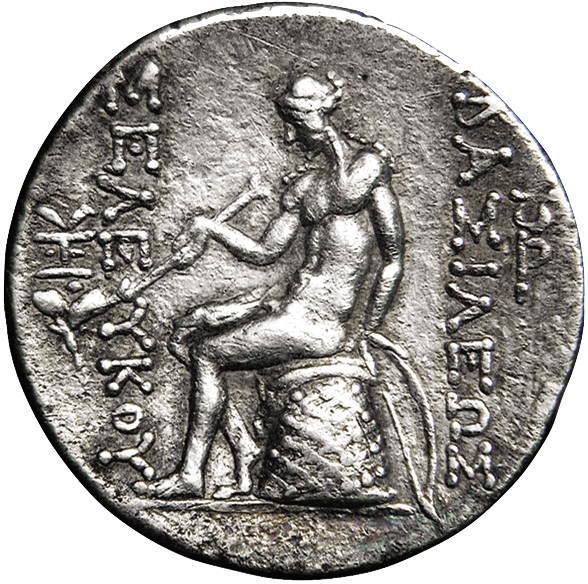
COIN OF AUDOLEON.
to his friends (nec amicis deliberantibus deerat);
AVENTINENSIS, the name of a plebeian fa- and, on account of this expression, he has been
mily of the Genucia gens. The name was derived ranked by some legal biographers among the Roman
from the hill Aventinus, which was the quarter of jurists. In his old age, he adopted Cn. Aurelius
Rome peculiar to the plebeians. The family was Orestes, who consequently took the name of Aufi-
descended from the tribune Cn. Genucius, who was dius in place of Aurelius. This precedent has been
murdered in B. C. 473.
quoted (Cic. pro Dom. 13) to shew that the power
1. L. Genucius M. f. CN. N. AVENTINENSIS, of adopting does not legally depend on the power
consul B. c. 365, and again in 362, was killed in of begetting children. Aufidius was quaestor B. C.
battle against the Hernicans in the latter of these 119, tribunus plebis, B. c. 114, and finally praetor
years, and his army routed. His defeat and death B. c. 108, about two years before the birth of Cicero,
caused the patricians great joy, as he was the who, as a boy, was acquainted with the old blind
first consul who had marched against the enemy scholar. (De Fin. v. 19. )
(J. T. G. ]
with plebeian auspices. (Liv, vii. 1, 4, 6; Diod. SEX. AUFI'DIUS, was warmly recommended
xv. 90, xvi. 4; Eutrop. ii. 4; Oros. iii. 4; Lyd. by Cicero to Cornificius, proconsul of Africa, in B. C.
de Mag. i. 46. )
43. (Ad Fam. xii. 26, 27. )
2. ČN. GENUCIUS M. F. M. N. AVENTINENSIS, T. AUFI'DIUS, a jurist, the brother of M.
consul B. C. 363, in which year the senate was Virgilius, who accused Sulla E. c. 86. It was pro-
chiefly occupied in endeavouring to appease the bably the jurist who was quaestor B. c. 84, and
anger of the gods. (Liv. vii. 3; Diod. xvi. 2. ) who was afterwards praetor of Asia. (Cic. pro Flac.
3. L. Genucius (À VENTINENSIS), tribune of the 19. ) He may also have been the Aufidius once
plebs, B. C. 342, probably belonged to this family. talked of as one Cicero's competitors for the con-
He brought forward a law for the abolition of sulship, B. C. 63. (Cic. ad Att. i. 1. ) In pleading
usury, and was probably the author of many of the private causes, he imitated the manner of T. Ju-
AEON,
DOOOOOO
## p. 419 (#439) ############################################
AUGEAS.
419
AUGURINUS.
ventius and his disciple, P. Orbius, both of whom labours, imposed upon him by Eurystheus, was
were sound lawyers and shrewd but unimpassioned to clear in one day the stables of Augeas, who
speakers. Cicero, in whose lifetime he died at a kept in them a large number of oxen. Heracles
very advanced age, mentions him rather slightingly was to have the tenth part of the oxen as his re-
as a good and harmless man, but no great orator. wurd, but when the hero had accomplished his
(Brutus, 48. )
(J. T. G. ) task by leading the rivers Alpheus and Peneus
T. AUFI'DIUS, a physician, who was a native through the stables, Augens refused to keep his
of Sicily and a pupil of Asclepiades of Bithynia, promise. Heracles, therefore, made war upon
and who therefore lived in the first century B. c. him, which terminated in his death and that of his
(Steph. Byz. s. v. Auppáxrov. ) He is probably the sons, with the exception of one, Phylous, whom
same person who is quoted by Caelius Aurelianus Heracles placed on the throne of his father. (Apol-
by the name of Titus only, and who wrote a work lod. l. c. ; ï. 7. $ 2; Diod. iv. 13, 33 ; Theocrit.
On the Soul and another On Chronic Diseases, con- Idyll. 25. ) Another tradition preserved in Pau-
sisting of at least two books. (Acut. Morl. ii. 29, sanias (v. 3. § 4, 4. § 1) represents Augeas as
p. 144; Morb. Chron. i. 5, p. 339. ) [W. A. G. ) dying a natural death at an advanced age, and as
AUFI'DIUS BASSUS. [Bassus. ]
receiving heroic honours from Oxylus. [L. S. )
AUFI'DIUS CHIUS, a jurist, who is known AU'ĞEAS or AU'GIAS (Avgéas or Avslas),
only from the so-called Vaticana Fragmenta, first an Athenian poet of the middle comedy. Suidas
published by Mai in 1823 along with fragments of (s. v. ) and Eudocia (p. 69) mention the following
Symmachus and other newly-discovered remains of plays of his : "Agporkos, Ais, Karnpoúmeros, and
antiquity. In Vat. Frag. $ 77, an opinion of Ati-Hopoúpa. He appears likewise to have writien
licinus is cited from Aufidius Chius; hence it is epic poems, and to have borrowed from Antimachus
plain that this Aufidius could be neither Namusa of Teos. (Fabric. Bibl. Graec. ii. p. 425. [C. P. M. ]
nor Tucca, the disciples of Servius, for they lived AUGURI'NUS, the name of families in the
long before Atilicinus. The Chian may possibly Genucia and Minucia gentes. The word is evi-
be identified with Titus or Titus Aufidius, who dently derived from augur.
was consul under Hadrian, and is mentioned in the
I. Genucü Augurini.
preamble of a senatusconsultum which is cited in They must originally have been patricians, as we
Dig. 5. tit. 3. s. 20 [22]. $ 6. (Bruns, Quid con- find consuls of this family long before the consulship
ferant Vaticana Fragmenta ad melius cognoscendum was open to the plebeians. But here a difficulty
jus Romanum, p. 16, Tubingae, 1842. ) (J. T. G. ] arises. Livy calls (v. 13, 18) Cn. Genucius, who
AUFI'DIUS NAMUSA. (Namusa. ) was consular tribune in B. C. 399 and again in 396,
AUFI'DIUS TUCCA. [Tucca. ]
a plebeian, and we learn from the Capitoline Fasti
AU'GARUS. (ACBARUS. )
that his surname was Augurinus. Now if Livy
AUGE or AUGEIA (Aům or Aóveía), a daugh- and the Capitoline Fasti are both right, the
ter of Aleus and Neaera, was a priestess of Athena, Genucii Augurini must have gone over to the
and having become by Heracles the mother of a plebeians, as the Minucii Augurini did. It is
son, she concealed him in the temple of the god- possible, however, that Augurinus in the Capitoline
dess. In consequence of this profanation of the Fasti may be a mistake for Aventinensis, which
sanctuary, the country was visited by a scarcity; we know was a plebeian family of the same gens.
and when Aleus was informed by an oracle that [AVENTINENSIS.